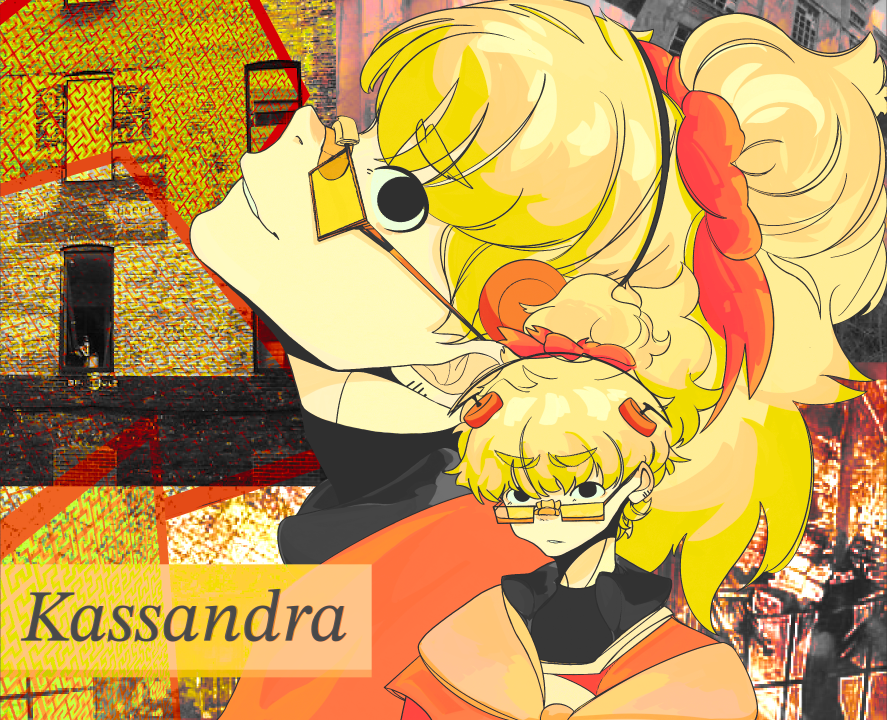
Kassandra
Even at the end of the world, people are still struggling to truly connect. You can’t blame it on the phones, the corporate jobs, or the games, not anymore. Everything is primed for socialization, and yet—still broken people, broken relationships, broken homes.
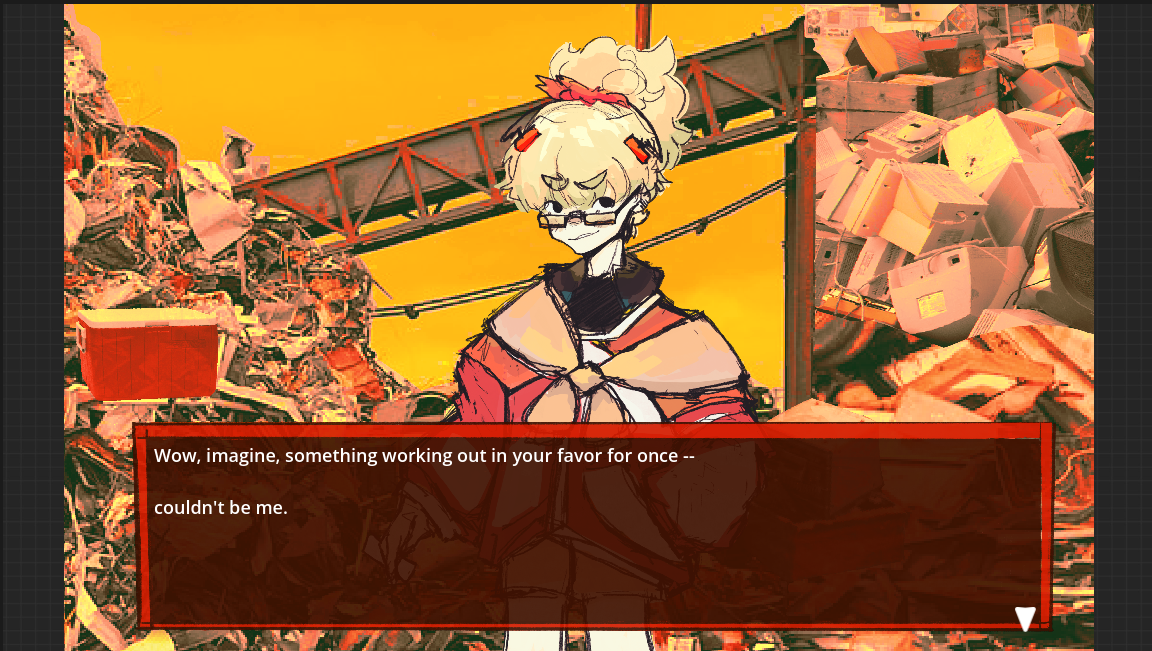
Kassandra is a soft-apocalypse visual novel about reaching for nuance and understanding despite deep societal wounds while daring to hope for, and working to build, a brighter future in a world devastated by a solar event that seared the world in flame.
A woman on the brink of death decides to stop running from her problems. Still traumatized by a guilty realization concerning her father’s death, she plans to turn a world violently against technology into one that has the capacity to outlive her, one that he would be proud of.
But, she has to do it all while hiding her plans from a precipitous government mandated training program and her mentee, Spencer, who by the end of the game must decide between letting Cassandra live, or using her death as a bargaining chip to get the info he needs to find his younger sister.
It’s like the atmosphere of 13 Sentinels meets the character design of Hundred Line, but they pass by the Paranormasight games in the hall and can’t keep themselves from staring.
----------------------------------------------------------------------------------------------------------
What will you do with your last 30 days?
20 individuals from all walks of life have been selected by lottery as part of a month-long city-wide revitalization project. A mentorship initiative meant to re-establish basic services, industries, and to reconnect disparate and isolated communities after the fires of the Rokewood Solar Event devastated most of North America’s existing technological infrastructure. Not that you can be bothered to pay much attention when your own life is coming to an abrupt conclusion.
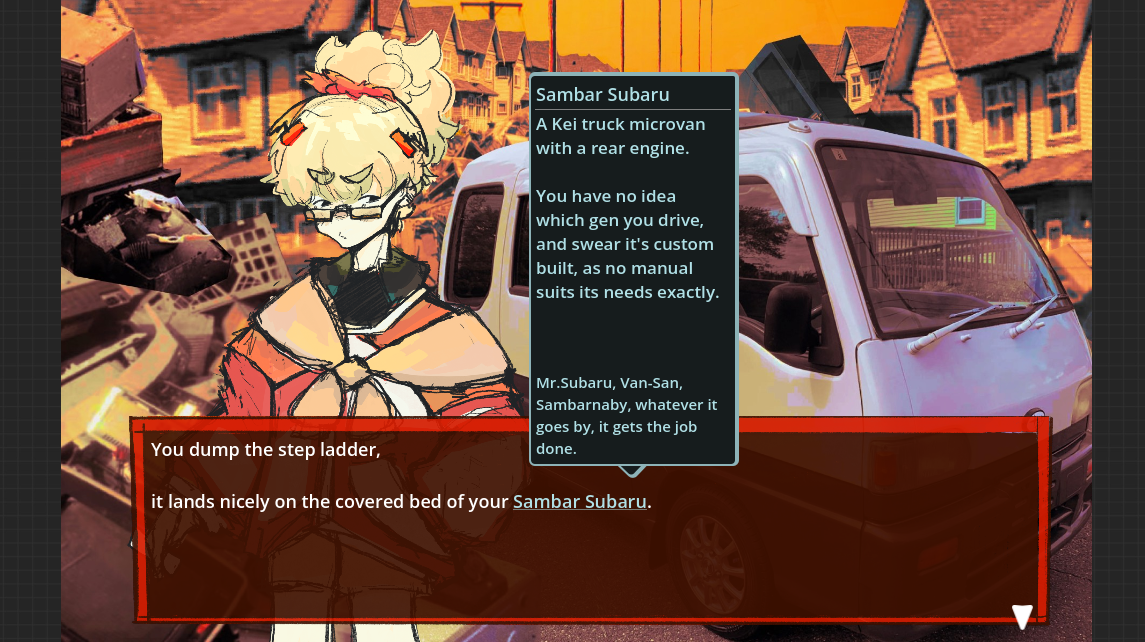
You make decisions as Cassandra Banks, an outcast tinker and information archivist who wants nothing more than to live out the remainder of her days in the fortress of solitude she’s been developing for the last six months outside the city. After resigning to the idea of your imminent death by a form of untreatable genetic insomnia, all you want is to live the rest of your life without any regrets, and that means atoning for the guilt you feel surrounding the death of your father by carrying on his legacy in secret. You plan to conserve critical computer parts for future generations, on the off chance that society decides they made a mistake in letting so much of it decay.
Unfortunately your cloistering and preservation plans are disrupted right as they’re ready to be put into motion. The initiative letter comes in, one of the ones you had ignored previously – and you’re just unlucky enough to have been chosen for the program due to your role as an essential communications worker. Or at least, since that was your job. Which means you’re now responsible for handling one Spencer Waite, a moody and incredulous mentee with troublesome secrets and goals of his own.
You would have ignored all of it, but there's one sticking point that keeps everyone drawn into the program. The opportunity to have a single wish granted by the government, given, your internship period turns out to be a success. The wish grant. With something like this, maybe you could do more than just leave humanity’s options open. But you aren’t sure it will be worth anything, seeing as you’ll be dead soon anyway.
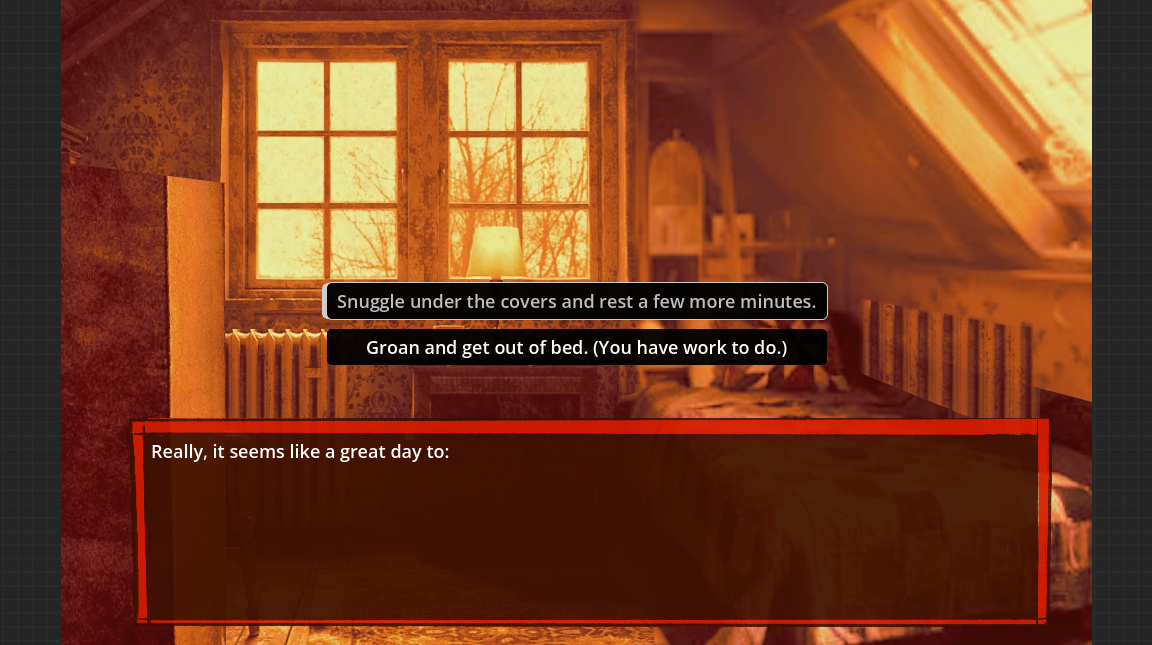
As the game progresses, your choices directly affect what Cassandra is able to do with her last month of remaining life. Choices come with a cost, as you unravel the complexities of humanity, what life looks like after the end of the world, and how to pass the time until your own final breath. Your decisions become more difficult to make as your resources wane and the idea of being alive looks more fleeting and beautiful than it ever did when you had the chance to live it. Will you discover you have a wish after all? Will you even be able to last long enough to get it? What will you do with your last 30 days?
______________________________________________________________________________________________
- Choices Matter
- Replayability
- Narrative/Character Depth
- Mysteries/Investigations
- Problem solving/ stat management/ and passive romanticism of the apocalypse
Mechanics/ Gameplay Loop:
Gameplay Loop:
- The story will present a problem or a dilemma that serves as an arc of the story
- Cass will decide how to solve minor problems
- And she’ll make decisions based on a given solution set
- There will then be narrative or stat results that affect the game immediately or in the long term.
- And she’ll make decisions based on a given solution set
- Cass will decide how to solve minor problems
- The stats include the following and are reported in a journal before the morning of the next day:
- Public opinion (of technology) a % in favor or against
- Technology preservation status (catalogue density) How much preserved by the end of the game
- The status of your mentor mentee relationship:
- A descriptive word out of a rank of 10: (1 (Non-existent) to 10 (Partners in crime))
- Fulfillment and satisfaction (actually living life)
- increases with interpersonal resolution and or making goal progress – decreases when goal progress is achieved at the cost of interpersonal relations
- Disease progression (Approx # days remaining until death) – an educated estimate
- Mysteries solved (#/??)
- There will be some kind of passive constant interaction/movement with the world:
- Including:
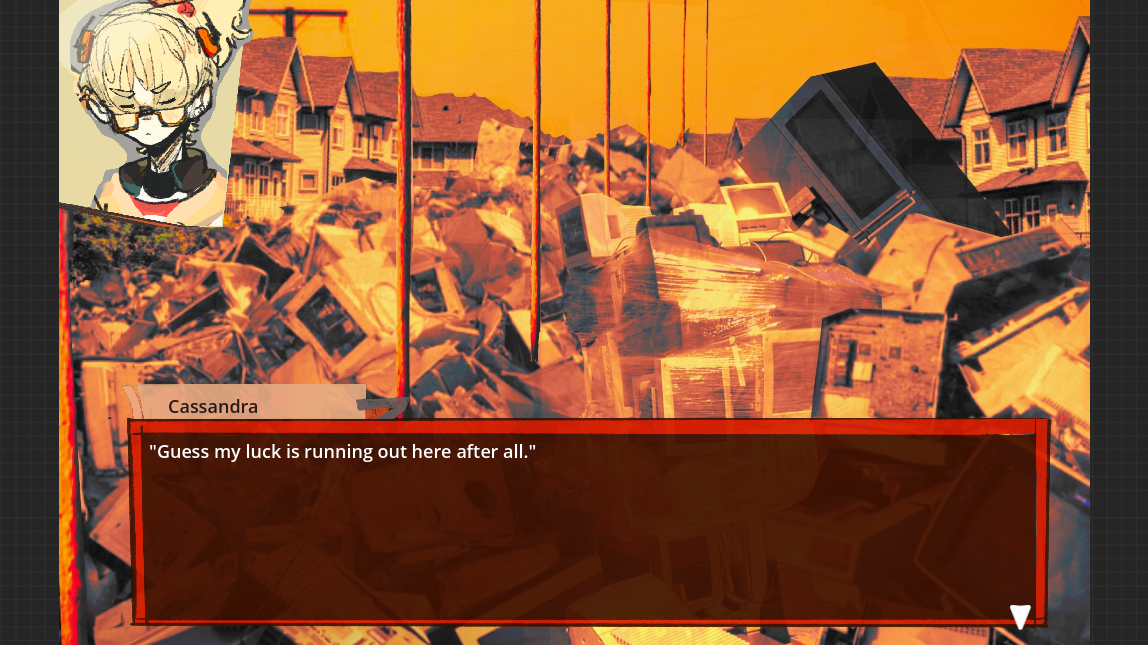
- Shifting from first person to third person when talking with someone (more like Paranormasight TMC)
- Interesting lighting and it’s motion – like 13 Sentinels
- Character sprite movement - Dual sprites where two sprites are interacting as one
- Including:
- And potentially:
- Being able to lock on to/click a character and zoom in --Danganronpa style
- Point and click mechanics to investigate things in the environment
- Move in and out of windows/chapters/povs -- Procreate view type thing
- Other mechanics might make an entrance as scope allows.